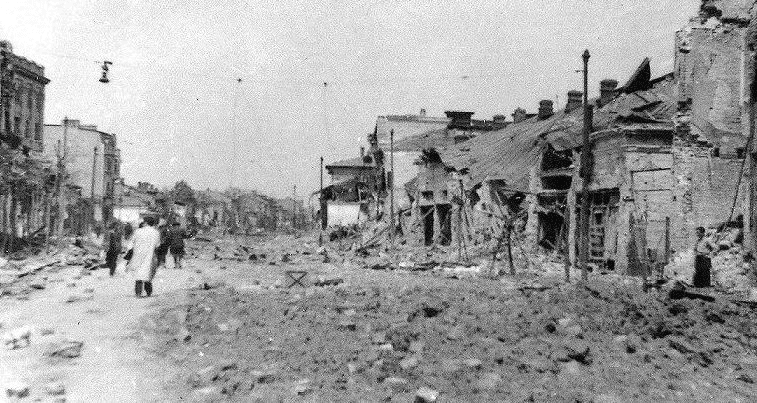

La începutul celui de-Al Doilea Război Mondial, Regatul României s-a alăturat coaliției conduse de Hitler. Motivele acestei decizii au fost de natură geopolitică: România acuza URSS de anexarea Basarabiei, locuită de moldoveni vorbitori de română, și a Bucovinei de Nord în 1918. Aceasta a determinat România să-l susțină pe Hitler, care îi garanta siguranța și a trimis imediat trupe pe teritoriul românesc. În septembrie 1940, Ion Antonescu a primit puteri dictatoriale, iar toate partidele politice, cu excepția celui condus de Antonescu, au fost interzise. În caz de victorie, Hitler promitea să cedeze României nu doar Basarabia, ci și întreaga coastă a Mării Negre, inclusiv Odesa. În 1944, orașul a suferit o serie de bombardamente puternice din partea SUA și Marii Britanii, iar mai târziu a fost ocupat de sovietici. În acest articol vom povesti despre această tragedie. Mai multe pe bucharestyes.eu.
Cum s-au desfășurat evenimentele
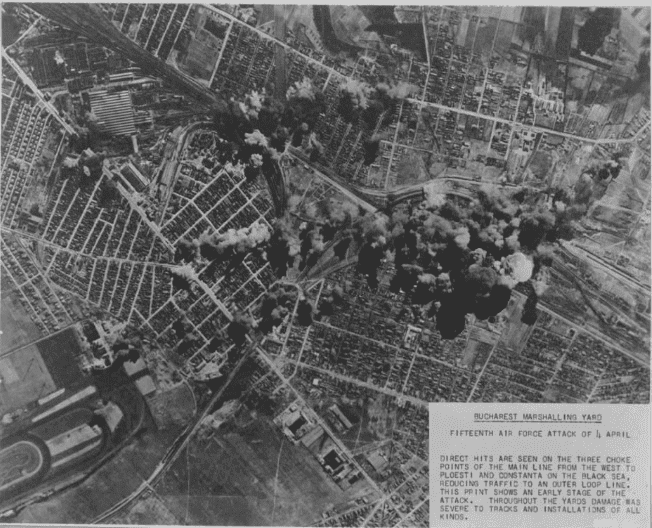
The city was bombed by American and British aviation in 1944. The largest bombing took place on April 4, 1944, when the northwestern part of Bucharest was completely devastated by air raids. During this bombing, 5,000 people lost their lives.
The second major attack occurred on April 15, 1944, when incendiary bombs were used. At that time, the main target was the Chitila railway station. However, due to poor weather conditions, the exact results of the bombing could not be assessed. According to some sources, the University of Bucharest was destroyed in this attack.
Later, Operation „Tidal Wave” was conducted, during which aviation targeted oil storage facilities and factories. Planes took off from the Foggia airbase in Italy and bombed oil storage facilities in Ploiești. On their return to base, the aircraft unloaded unused bombs over the capital, destroying a residential building and killing two residents.
The final bombing of the city was carried out by Hitler’s forces during the state coup in Romania.
Evenimentele de pe 4 aprilie
The events of April 4, 1944, remain the most devastating tragedy in Bucharest’s history. It was a typical Tuesday, with everything seemingly normal. Suddenly, an air raid siren sounded in the city, but most people ignored it, thinking it was just a drill. In a flash, the sky darkened with warplanes, and within moments, the city was destroyed, with bodies of the victims lying on the shattered streets.
One eyewitness, Mihai Sebastian, shared his feelings about that day: „When I went out into the yard, I saw an innumerable amount of colored papers floating down (likely leaflets), and I thought the planes had only dropped leaflets… The first rumors from the city—a bomb on Brezoianu, one on Carol Street—seemed like exaggerations. When I went to the center, a strange nervous excitement filled the streets, more from curiosity than horror. Only later did we understand the scale of the disaster.”
The primary target of the bombing was Bucharest’s Northern Railway Station. The United States and the United Kingdom aimed to disrupt enemy military transport to the Moldavian front, where Soviet forces were stationed. According to Romanian archives, the goal of the bombing was to dismantle the railway system, military industry, and all economic infrastructure, including civilian areas. Similar bombings took place in Romanian cities like Cotroceni, Grivița, and Ghencea.
While the railway station could indeed be considered a strategically important military target, the mission ultimately turned into a brutal killing of Bucharest’s civilian population.
The explosions also damaged significant city landmarks and hotels, such as the Athenee Palace, Ambasador, Papadopol, and buildings like „Generala,” „Mica,” „Kapriel,” „Băicoianu,” Moara Românească, and Banca de Credit.
Bucharest economist Gheorghe Zane recounted the events of April 4: „The Athenee Palace was ablaze, and smoke was rising from other parts of the city. Elena and I left the hotel, horrified, heading towards the Athenee Palace, which was still burning, with flames coming out of every window; a bit further up Calea Victoriei, I saw the Splendid Hotel smoking, almost entirely destroyed, and the sidewalks littered with shattered glass from bomb-blasted shopfronts. Behind the destroyed Athenee, the Committee of Patronage exhibition hall was still smoking. Up Calea Victoriei, left and right, from place to place, buildings were demolished. Down to Frumoasă Street, every window was shattered; from St. Voivodes Street to the North Station, the bombing caused horrible chaos. The North Station, Basarab Marfuri station, and Calea Griviței were badly damaged. I saw a tram, stalled; the driver lay dead, slumped over the control panel. We did not go any further.”
People recalled the piles of dismembered bodies in the streets, with organs and intestines hanging from the trees. Many were suffocated under the rubble.
During subsequent bombings, there were fewer casualties, but over 17 bombings in total, 5,524 residents of Bucharest were killed, 3,373 were wounded, and 47,974 were left homeless or injured. A total of 3,456 buildings were destroyed, with 3,473 partially damaged. This tragic chapter in Bucharest’s history will remain forever etched in the memories of its residents.